Putting Our Money Where Our Values Are
Issue 4 - Nov. 27, 2025
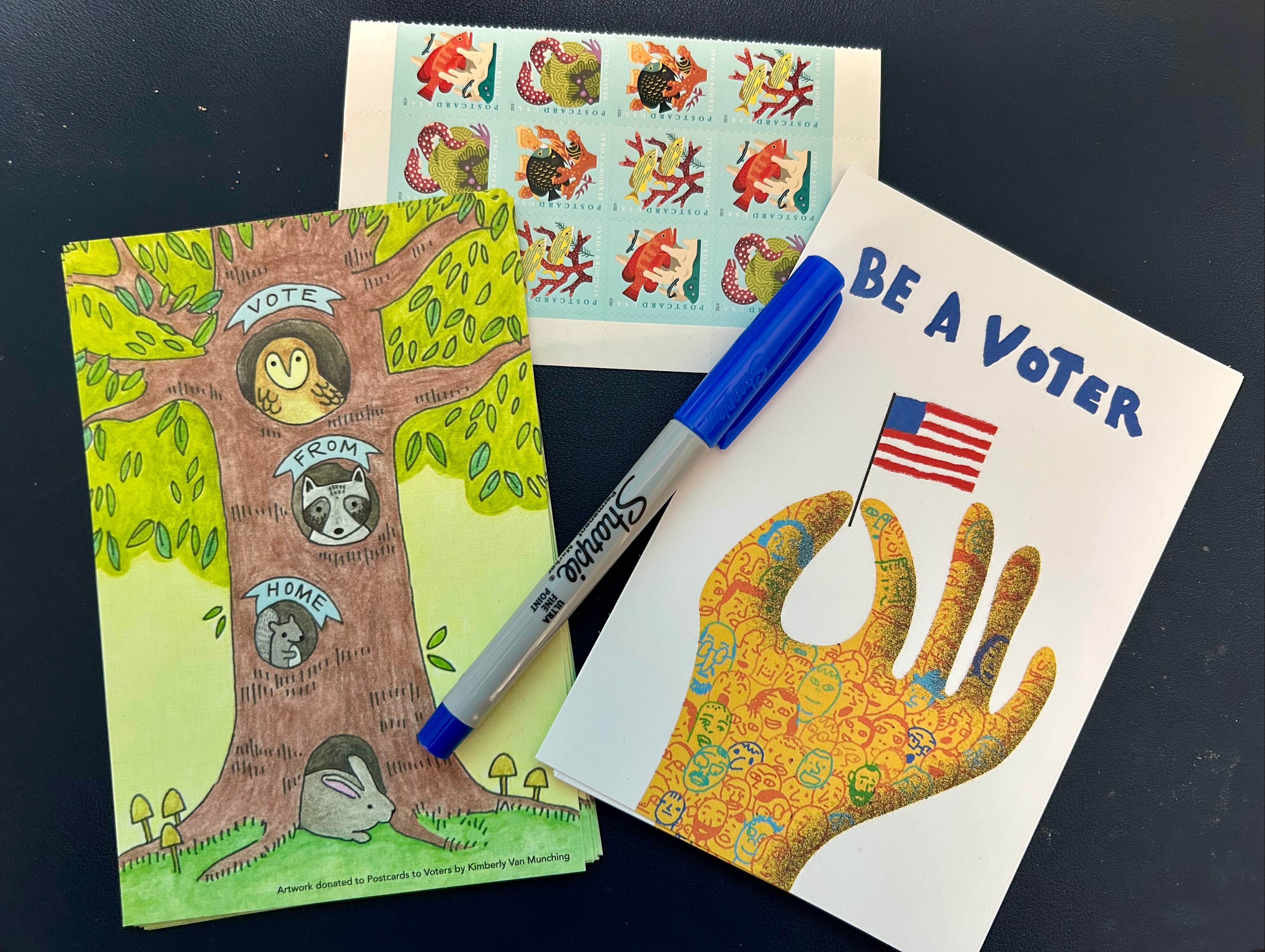
This issue, we wanted to highlight opportunities to join in community movements, one small action at a time. First, we have a story from contributor A. Glore about the joy and sense of connection that comes from signing up to write snail mail to prospective voters. Next, we look at Indivisible’s “We Ain’t Buying It” campaign, as well as other boycott campaigns targeting the ravenous profits of big business this holiday season. Finally, this is no time to let up on our efforts with mutual aid - we will continue to share resources people can plug in to.
The Power of the (Hand)Written Word
by A. Glore, Contributor
In early 2017, as Democratic newcomer Jon Ossoff was running for special election as a U.S. Congressman, Tony McMullin quit his banking job to run an unusual political operation out of his Georgia home. The scheme? Write postcards to Democratic voters in Ossoff’s district in the hope that the handwritten reminders to participate in the off-year election would help lead Ossoff to victory.
That March, McMullin and four other volunteers wrote scores of postcards. Although Ossoff lost that election, his campaign gave birth to a valuable get-out-the-vote tool. Named Postcards to Voters (PTV), the organization that began with five people grew to over 7,000 volunteers in just six months.
Today, PTV boasts a roster of 75,000+ volunteers, hailing from every state, including Alaska and Hawaii. They’ve written close to eight million postcards in over 200 key, close elections. And in keeping with the notion that all politics are local, PTV works with campaigns of all sizes. From state senators to school board members, no elected position is too small for PTV.
The creation of non-profit Vote Forward, whose mission is similar to PTV—contact select voters through personalized, mailed correspondence—also happened in 2017. Like PTV, Vote Forward started small as the brainchild of one man, Scott Forman. Instead of postcards with an all-handwritten message, however, Vote Forward volunteers write letters that are a mix of pre-printed information and personalized handwritten notes.
Today, Vote Forward advertises itself as “innovation backed by scientific methods.” To maximize their effectiveness, they structure every campaign as a randomized controlled trial, always analyzing results and tweaking methods. According to their website, since its inception, more than 285,000 Vote Forward volunteers have written 40 million-plus letters.

How Effective Are Postcard and Letter-Writing Efforts?
The thinking behind both PTV and Vote Forward is that while most pre-printed campaign mail goes straight to the recycling bin, handwritten calls to action are read and saved. Postcards can function like mini bulletin boards, reminding voters of dates and names. Letters that start with a personal story—as many of Vote Forward’s letters do—can spur and inspire.
Postcards require more time and effort than adding lines to a letter, but they’re also cheaper to mail. For Vote Forward, volunteers need access to a printer, as each letter contains the recipient’s printed name and address. Both activities can be done in groups or solo, and both require the volunteer to pay for postage.
While no one questions whether post-carding and letter-writing gives volunteers a sense of purpose and creates opportunities for friendships and networking, it’s natural to wonder about the electoral effectiveness of the effort. Does all that paper, ink and postage really make a difference in campaign outcomes?
The answer is yes. When analyzed using control groups, studies showed that voters who received handwritten postcards or letters voted at a slightly higher rate than those who didn’t. Though the differences in percentages are always small, the addition of a few hundred or thousand votes in a close election can easily mean the difference between victory and defeat.

Letters vs Postcards: What’s the Diff?
PTV sends cards only to registered Democrats on behalf of specific candidates, and for a candidate to receive PTV’s backing, polls must show the race is close. Vote Forward focuses their mailings on underserved communities and low-propensity and overseas voters, with a general message to vote in the upcoming election. No candidate or party is identified or endorsed
Figuring out which method—post-carding or letter writing—is the most effective is tricky. Many small and subtle factors, such as the legibility of the handwriting, the range of the target group, and the timing of the delivery, can have an impact. But statistical analyses suggest that letter writing, with its mix of pre-printed and handwritten messaging, is a bit more successful than post-carding. For those who only have time for one group and want the biggest bang for their buck then, letter writing might be the way to go.
I’ve been writing postcards, on and off, since late 2017, but I’m a newbie at Vote Forward. In both cases, I appreciate the flexibility of the process. If I don’t have dedicated hours to spend, I can make use of ten minutes here and fifteen minutes there to dash off a few letters or postcards. Personally, I like the old-timey-ness of postcards, their look and feel. I enjoy lining up my fine-tip markers and deciding on a color scheme for the text. Handwriting tires my fingers, but it’s a good tire!
FUN FACTS
- According to one of the studies, postcards were most effective with younger voters. Apparently, the novelty of finding a handwritten card in the mailbox proved exceptionally motivating for people under 45.
- Postcards to Voters began in 2017 with five people in Georgia, while six volunteers in Alabama started Vote Forward in 2017.
- According to a 2018 statistical analysis, post-carding had more impact on Democratic voters in Red areas than in Blue areas.
- Partially pre-printed mailings did well with women, voters 45 years or older, and those with household incomes under $75,000.
Thanks for reading Democracy Action Network! This post is public so feel free to share it.
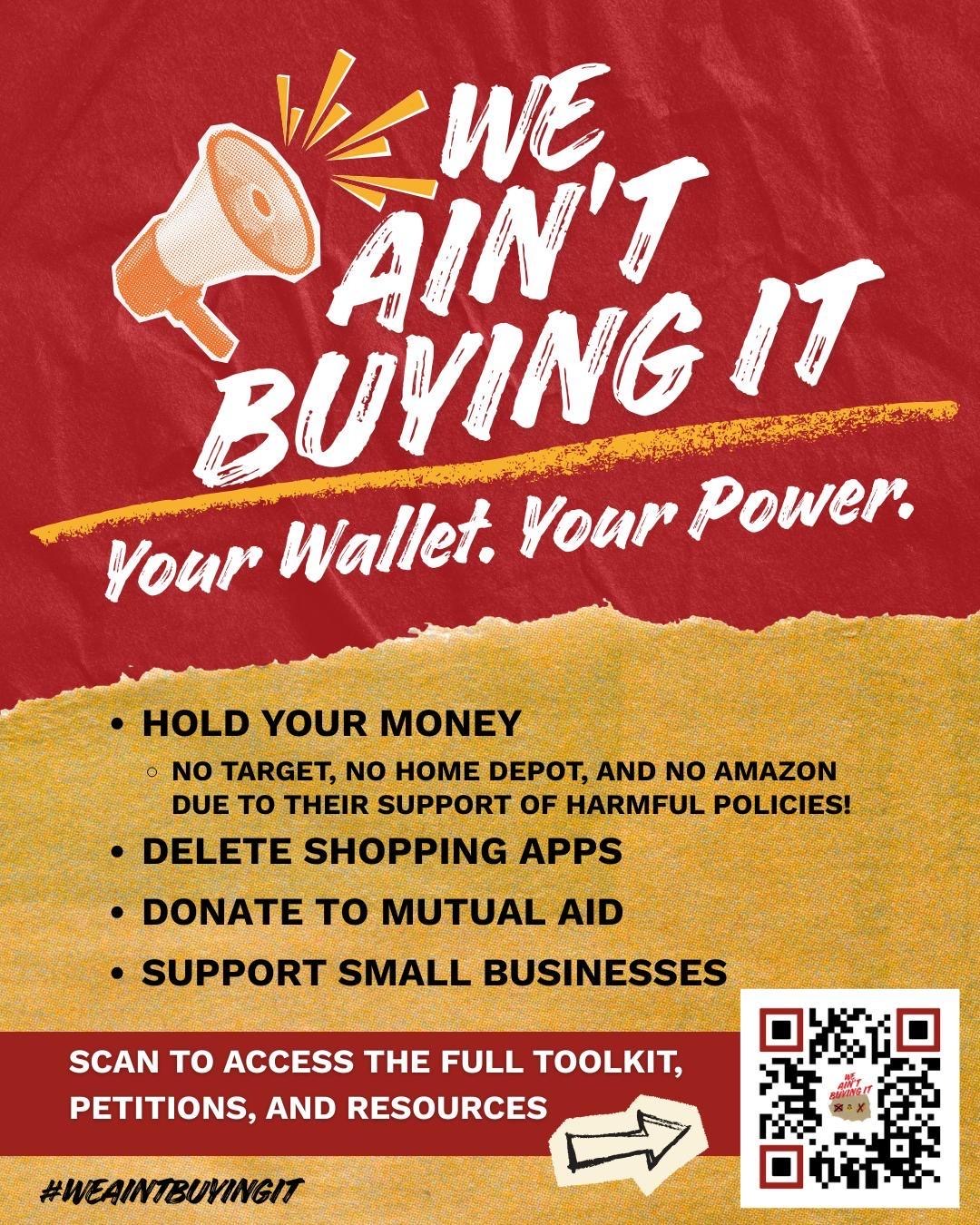
This particular action, backed by Indivisible, Black Voters Matter, and Until Freedom, is an economic action and solidarity campaign designed to defend democracy and reclaim community power. Over this Thanksgiving weekend, Indivisible and Democracy Action Network encourage you to choose freedom over shopping and family over corporations.
From Thanksgiving to so-called “Cyber Monday,” don’t buy anything from Target, Amazon (including Prime Movies, Kindle, and other sub-brands), or Home Depot stores and shop small with local and values-driven stores instead. And, of course, spread the word! You can learn more and sign the pledge on the We Ain’t Buying It website.
But this isn’t the only anti-consumerist action to join up with this season.
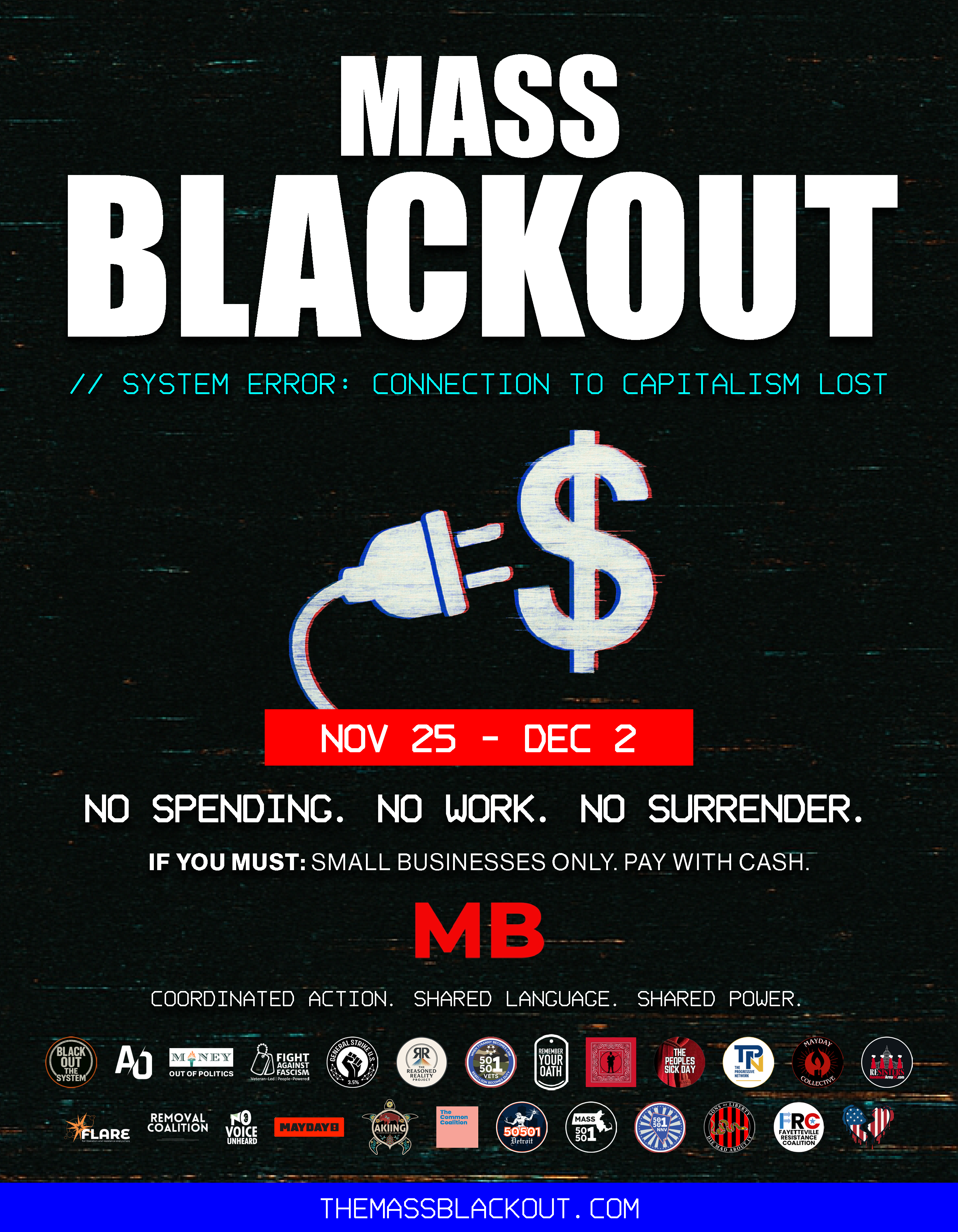
The Mass Blackout is a nationwide economic action coordinated by a coalition of progressive organizations which runs through December 2, which calls on communities to reject online or in-store shopping outside of small businesses, to stop work or to participate in a “working strike,” to cancel subscriptions to big streamers and stop digital media purchases, and to pay in cash wherever possible.
And, of course, we ask all of our volunteers to not cross the picket line and support the Red Cup Rebellion, led by the Starbucks Workers United. The union went on strike on November 13, the day the ubiquitous “red cups” drop at Starbucks for the holiday season.
“We’re turning the Red Cup Season into the Red Cup Rebellion. Starbucks’ refusal to settle a fair union contract and end union busting is forcing us to take drastic action,” said Dachi Spoltore, a Pittsburgh, PA barista of 5 years who is on a ULP strike. “We’re striking for a fair union contract, resolution of unfair labor practices, and a better future at Starbucks. For every one barista on strike, dozens more allies and customers have pledged to honor the picket line and not buy Starbucks while we’re on strike.”
Sign the pledge here and, as always, never cross a picket line!
Mutual Aid Resources
This is always a hard time of year for our communities, so save money on new, tariffed decorations and knick-knacks suffering from planned obsolescence and support your neighbors instead! These resources lean LA-specific, since that’s DAN’s home port, but we encourage all of our readers to look up food banks and mutual aid groups in their own areas and lend them your support.
- Feeding America
- The Los Angeles Regional Food Bank Pantry Location Finder
- The Mutual Aid Los Angeles Network (MALAN) Group Directory and Volunteer Opportunity Calendar
- Los Angeles Community Fridges - A directory of all the community fridges in the broader LA area
- Google Doc of LA Mutual Aid Organizations
- NDLON - Adopt a Day Labor Corner
- LA Street Vendor Solidarity Fund
- FindHelp.org - A nationwide resource for locating all manner of support, from diapers to bus fare, by zip code
- Mutual Aid Hub - A nationwide resource for finding mutual aid groups in your area