Notes from France
The good, the bad, the sad, and the beautiful.
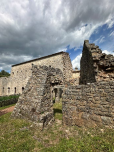
In my two-month interregnum between jobs, my partner and I took the rare opportunity to spend six weeks in France, mostly outside of Paris. This trip feels different from other vacations, not only because of the leisurely travel, but also because we are leaving the country at a time of great upheaval at home. This is not a travelogue (although if you plan to go to France, read Ina Caro's The Road from the Past first and don't miss seeing Thoronet Abbey between Cannes and Marseille). Rather, it is attempt to get some perspective on our present moment.
Hedwige and Bruno, our informed Airbnb hosts, expressed a sentiment shared by their Lyonnaise friends: Why is no one in America doing anything to stop this political cancer? Michele and Jackie, two travelers from Chicago whom we met in Marseille, said the same thing. So it seemed even fellow Americans were unaware.
Yet, Timothy Snyder, the historian and expert on fascism, in his review of the first 100 days, said he is hopeful because he didn't expect Americans to fight back as much as they have been doing. We have a chance, he thinks, because we regular Americans are actually standing up! He references, for example, folks who have never gone to a protest before coming out in numbers.
So why the disconnect? What exists in the space between what an unexpected number of American citizens are actually doing, and what folks abroad see and interpret as “nothing”? In this time of information overload, how can so many people be unaware of the many voices that are rising loudly?
It is right to first question the reality we now face daily: the stark lack of media coverage - notably in traditional outlets. But I also think a psychological shift is needed that has been decades in the making.
After 911, George Bush told us to “go shopping.” Contrast that sentiment with the individual participation by everyday Americans at the time of our founding. We don't know the names of all the protesters who dumped tea in Boston's harbor, but we understand that their activism mattered. We are now learning this for ourselves, in real time: we can't rely on our current leaders alone - not by a long shot. We must go back to reclaiming our voices, and turning those voices into daily actions.
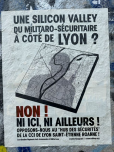
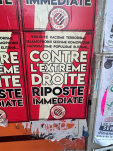
Lyon was occupied by Germany from 1940 until its liberation in 1944. If you visit the Resistance Museum, you learn that 1% to 3% of the population in occupied France resisted. This number sounds small until you read about the consequences of resisting: "They were killed (tortured first in many cases) for the smallest thing: singing the wrong song, being caught with a political flyer, smiling when confronted.” Even if 1% were closer to the true number, every one of those resisters is a hero. We are not at that point of repression yet, and hopefully never will be, but I contend, if you don't use it, you lose it.
How do we support each other to move from a place of passivity to one of activism?

Hedwige, Bruno, Michele and Jackie were all moved by the news that there was a resistance movement happening and growing in America. Hedwige planned to inform her friends, including her American ones, and Michele and Jackie downloaded the information about Indivisible. It seems so simple to us who have already been involved; and yet, it can be quite daunting to consider making resistance a part of life - especially when it rarely has had to be in your lifetime.
And perhaps that’s part of the problem, that Americans are used to a relative comfort in their place in the world. When does it end? It doesn’t. You have to do something every day and keep doing them until others are doing them with you. There cannot be a shrinking-back into feeling like it will all be okay eventually because things work themselves out. An over-eagerness to return to before. Those are pre-election sensibilities, and we have lost their luxury. For now.
In the Mucem Marseille, I saw a beautiful exhibit about the Neoclassical period in Europe. All things Roman were quite the rage in the 18th and 19th centuries-- architecture and fashion, for example. But there was a dark side. Mussolini justified Italy's invasion of Libya because it was once part of ancient Rome. France justified its conquest of Algeria, which lasted from 1830 to 1903, as “taming the Barbary pirates,” which translated to controlling the "inferior hordes.” Of course, we understand this kind of imperialist mindset. What was remarkable to me in this moment was the willingness of the French to turn a critical eye toward their own dubious history in order not to repeat it.
Would you find such an exhibit in Trump's America, if he has it his way? The extent of what we risk losing boggles the imagination. But it doesn't have to be so. The end of the story is not written yet - we are in it right now. Let's make sure we can say, whatever happens, I was present, I paid attention, and I tried to make a difference. Make sure not a single outlet can ignore the reality - and enormity - of our collective work. How incredible would it be to find myself in Lyon once again, but this time, greeted with exclamations of encouragement at having seen the tremendous efforts we are clearly making at home.
